
ROOT CANALS
A procedure to save a damaged or infected tooth, performed by our experienced general dentists.
What does the root canal procedure involve?

There are five steps in a root canal procedure:
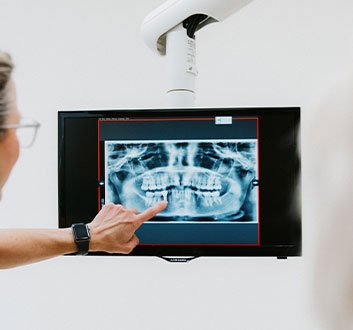
- X-rays are taken and local anesthesia is applied.
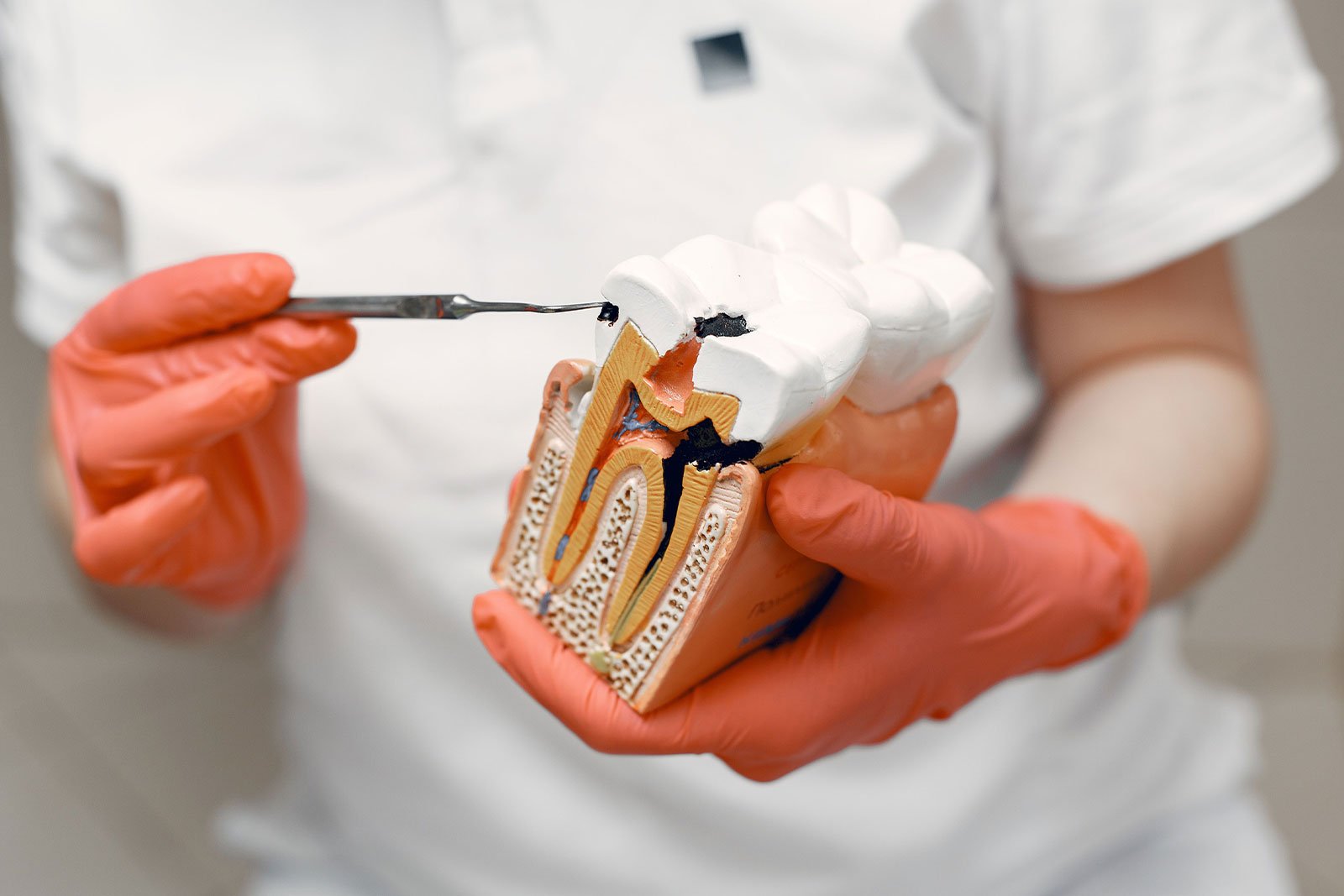
- Infected nerve tissue and bacteria are removed from the root canal.
- The canal is cleaned and sealed to prevent reinfection.
- The canal is filled with gutta-percha and adhesive cement.
- A crown is placed to restore normal tooth function.
What are the symptoms or signs that a root canal is needed?
Symptoms that indicate the need for a root canal include tooth pain, tender and swollen gums, a tooth that becomes discolored, or one that is particularly sensitive to heat and cold. Your general dentist will examine the tooth for signs of inflamed and infected pulp to see if a root canal procedure is required.
What are the causes of dental pulp or nerve damage?
Many things can cause damage to the dental pulp, including cavities and cracked fillings, chipped teeth, sports injuries and other events that allow harmful bacteria to enter the tooth. Even if there are no external indications of damage, decay could be spreading in the tooth pulp and causing nerve damage. If you have a painful tooth or inflamed, sore gums you should have it examined by your general dentist.


Why is root canal therapy necessary?
When damage has progressed to the point that nerves inside the tooth die and the tooth can no longer receive the organic nutrients and moisture it requires, root canal therapy is often the only way to preserve the tooth and protect the jawbone.
Risks Associated With Root Canal Therapy
Most patients report some discomfort in the days following root canal therapy. In most cases this can be treated with over-the-counter medication. In more extreme cases, where infection is still present, the general dentist may prescribe an antibiotic and prescription-strength pain reliever.
Do not chew directly on the repaired tooth until final restoration is complete, or else your tooth may crack. Final restoration should be completed as soon as possible to avoid the possibility of reinfection in the treated canal.
Like any medical or dental treatment, root canal therapy can involve complications. These complications are the exception rather than the norm, but in the event your root canal therapy is unsuccessful the general dentist can offer alternative options, such as repeating the treatment or extracting the infected tooth.


Other Services